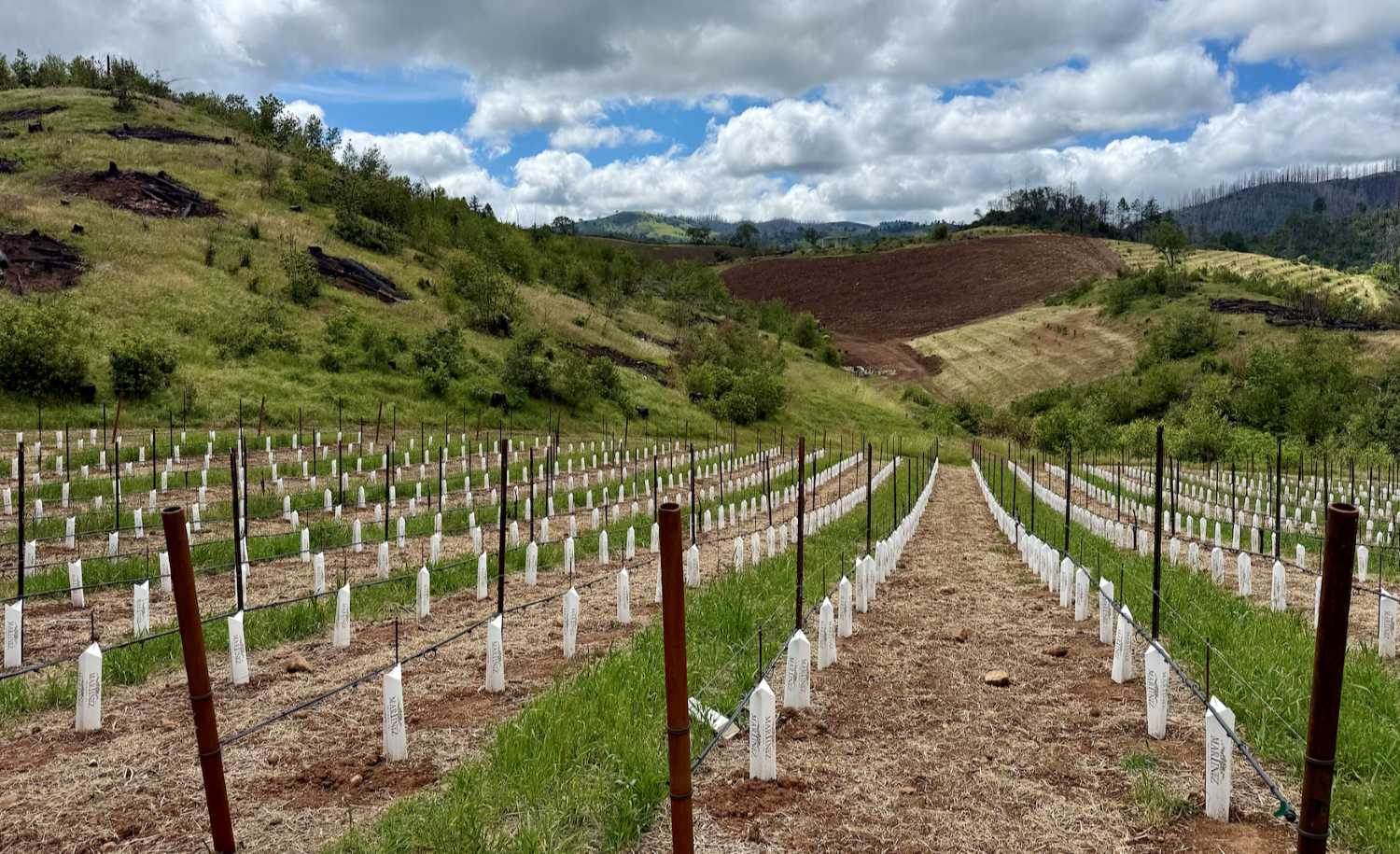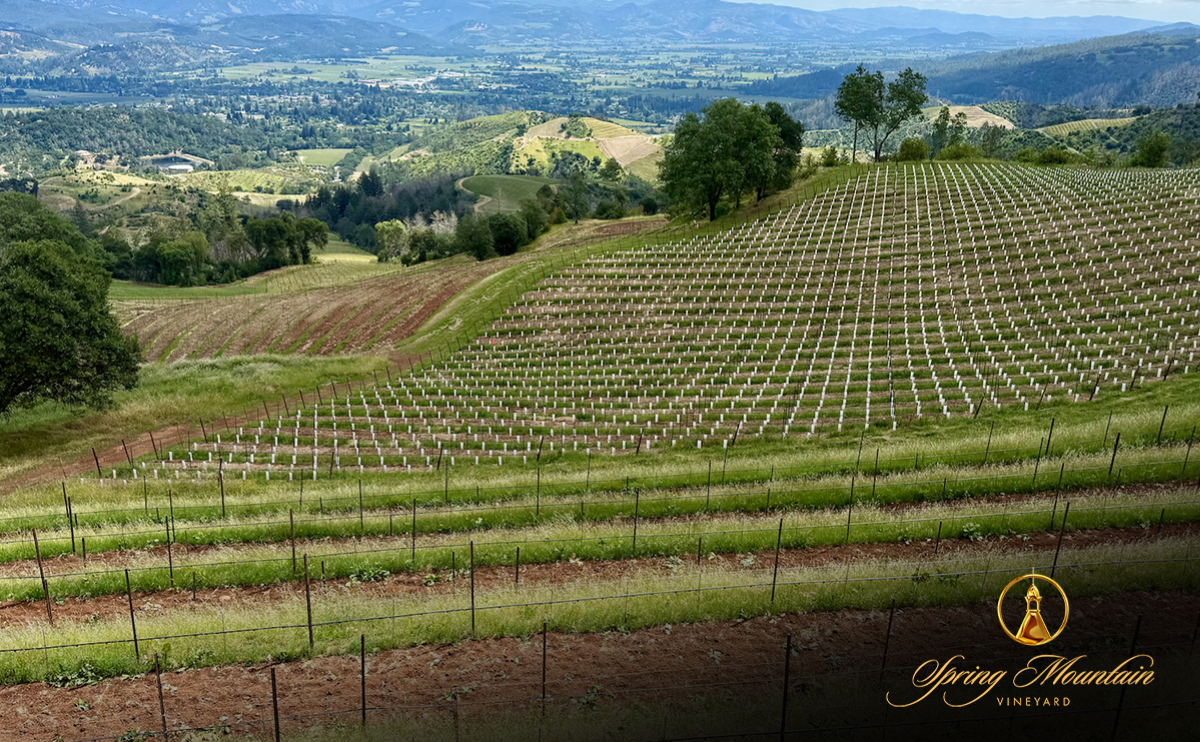

A mountain vineyard cannot eliminate wildfire risk, but it can reduce fuel, improve emergency access, protect water resources and manage the surrounding landscape to slow a fire’s advance. At Spring Mountain Vineyard, that work includes removing dead and hazardous trees, grazing thousands of sheep and goats, maintaining vineyards as living fire breaks, improving roads and turnarounds, and coordinating emergency access with neighbors and local fire authorities.
Like so many in our region, we've watched wildfires grow more frequent, more unpredictable, and more devastating — a reality that climate change has made impossible to ignore. While we can’t control extreme weather events, lower rising global temperatures, or end drought cycles, we can act as stewards of our land to mitigate fire damage. Over the past few years, under our new ownership, we have made a dedicated effort to build fire resiliency through investments in infrastructure and thoughtful land management.
Clearing the Way Forward
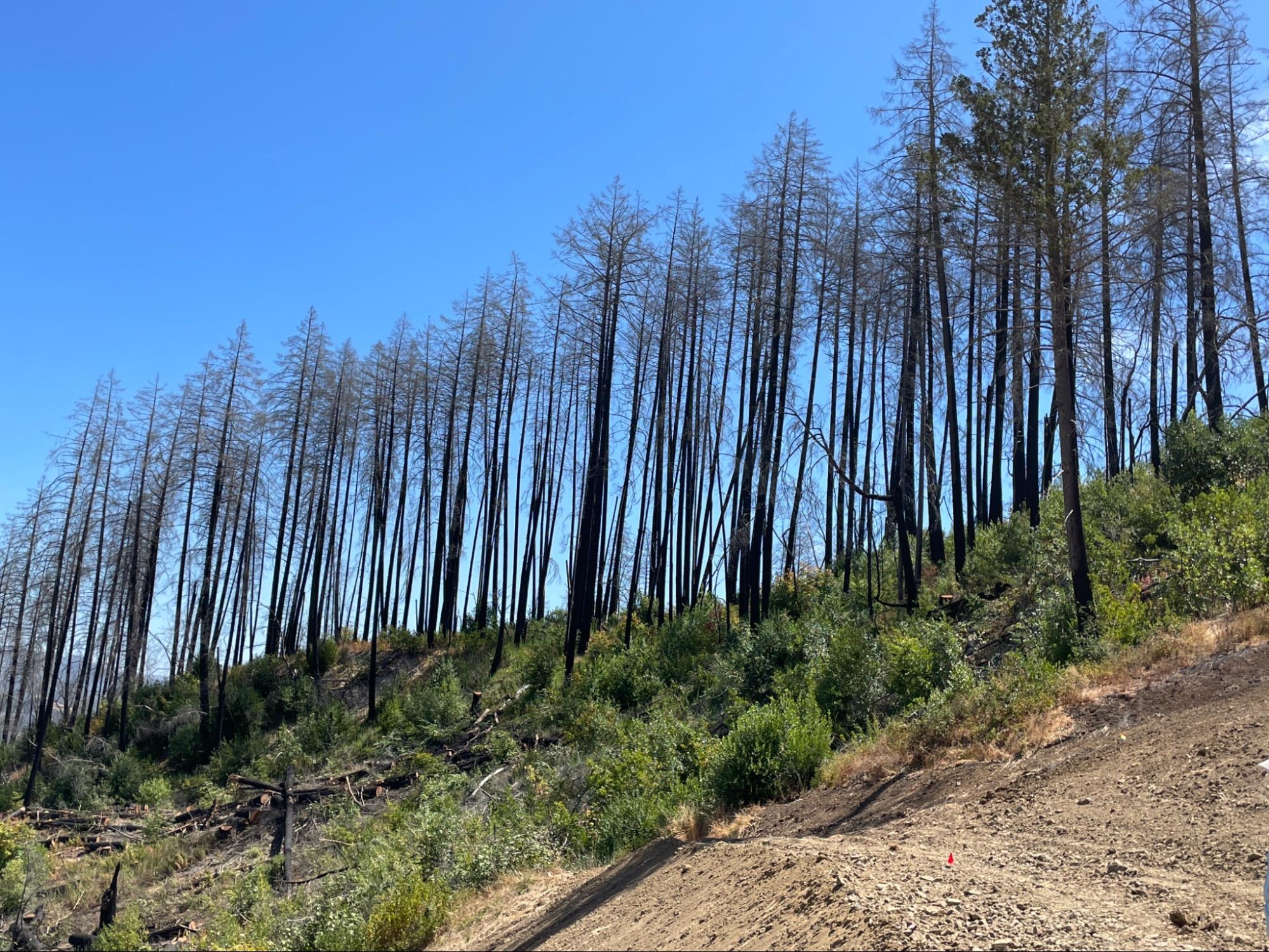
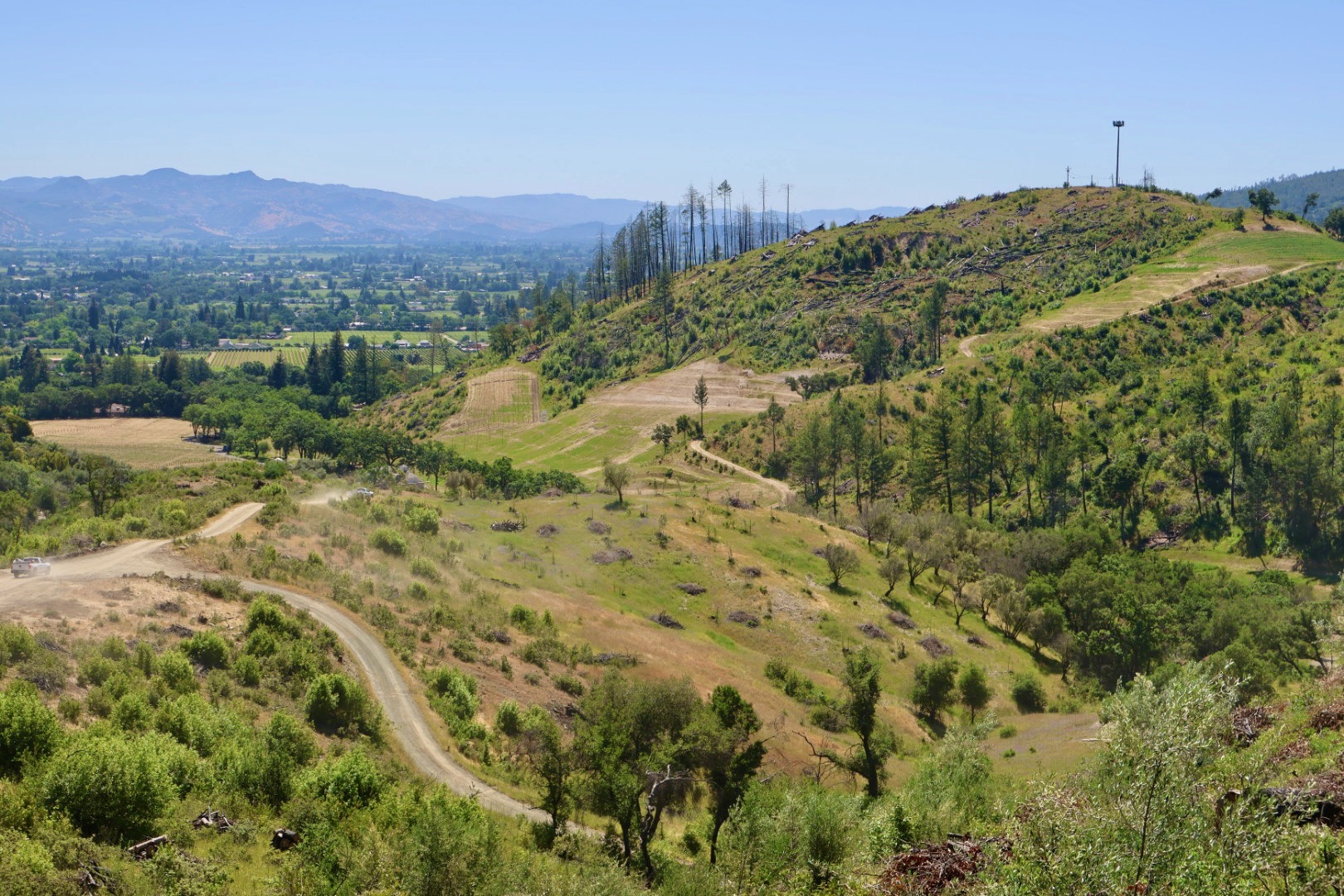
Our most significant investment has been the removal of dead and hazardous trees across our 825-acre property — especially along the boundary shared with the town of St. Helena. This large-scale cleanup, totaling more than $1.65 million, directly reduces accumulated fuel loads that intensify wildfire behavior. For years, our former forests looked like burnt toothpicks across our ridgelines (see the before photo from two years ago). We have diligently been cleaning the landscape and it is looking great. Now, native oaks, toyon, and laurel trees are pushing up through the soil. The olive orchard that burned to the ground is also sending up new growth from its stumps — stubbornly alive. We are nurturing what remains and coaxing these trees back toward productivity.
Four-legged Fire Brigade
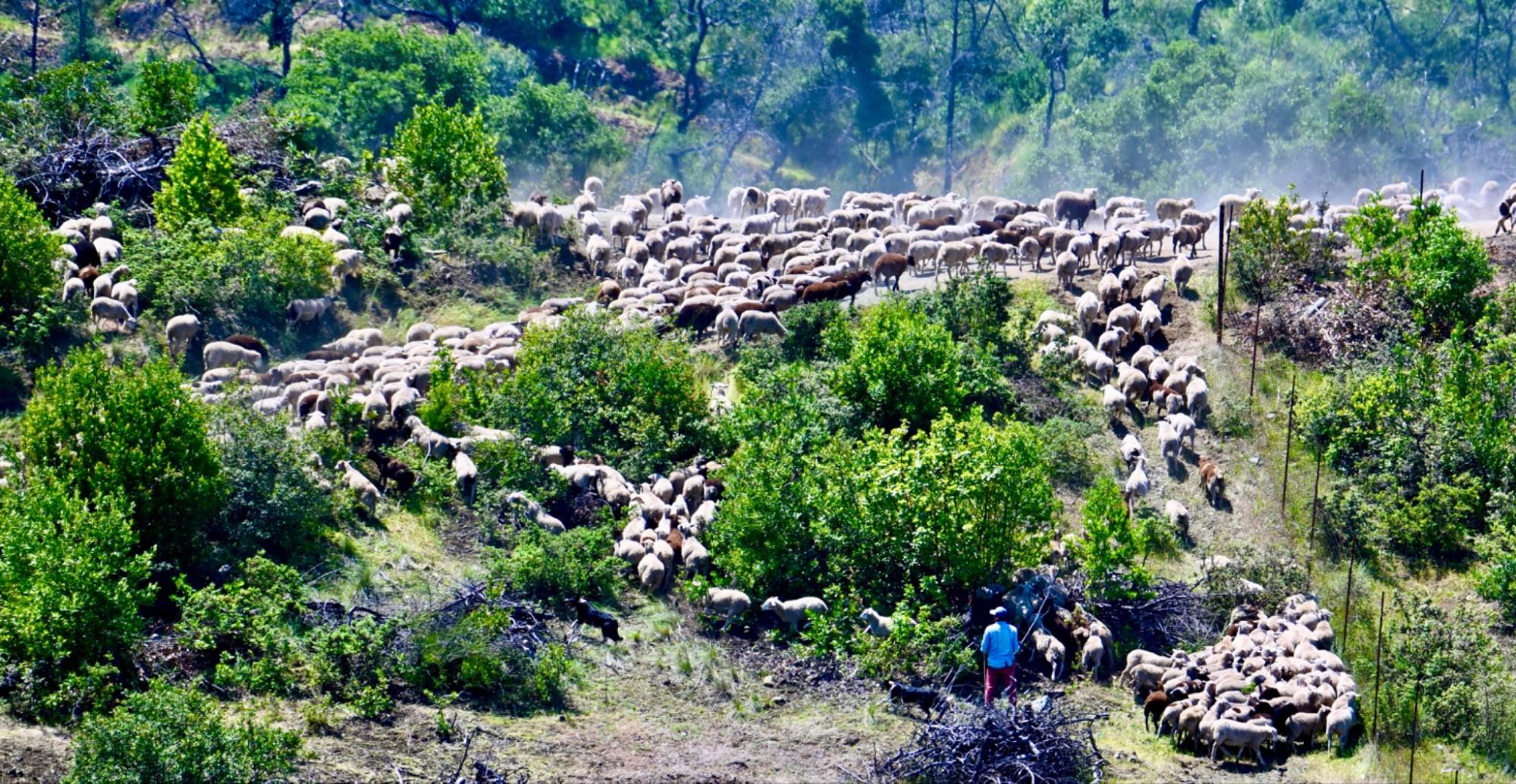
Each year, we invite more than 4,500 goats and sheep to graze our mountain, naturally reducing grasses and brush that would otherwise dry out and become combustible during fire season. In areas where livestock cannot reach, our crews mechanically manage the vegetation through targeted weed-whacking and mastication to keep regrowth under control.

Living Fire Breaks
Our vineyards, meanwhile, serve a dual purpose. Clean, well-managed agricultural zones act as natural fire breaks. As we redevelop approximately 220 acres of vineyard, that living barrier grows more substantial. When you look at our property, you see something tidy and organized. That is not an accident - it’s a form of protection.
Ready to Respond
It isn't only about prevention – it's also about response. We are working closely with the local fire chief to ensure our internal roads are navigable for emergency equipment, with plans for formal turn-arounds and widened access routes throughout the property. We're also working with neighboring wineries for reciprocal easements to allow emergency vehicle access. Lastly, we also plan to provide water sheds across the mountain as well as a fire truck available on-site.
Together, these efforts form a comprehensive approach to landscape stewardship – protecting the vineyard, improving ecosystem health, and enhancing wildfire resilience for our neighbors in St. Helena. Our 825-acre hillside property is now designed to limit and hopefully prevent fire from coming through. At the very least, these measures will contribute to slowing any potential firestorm down. It is our contribution to being good neighbors and preserving the beauty of our natural spaces for future generations.