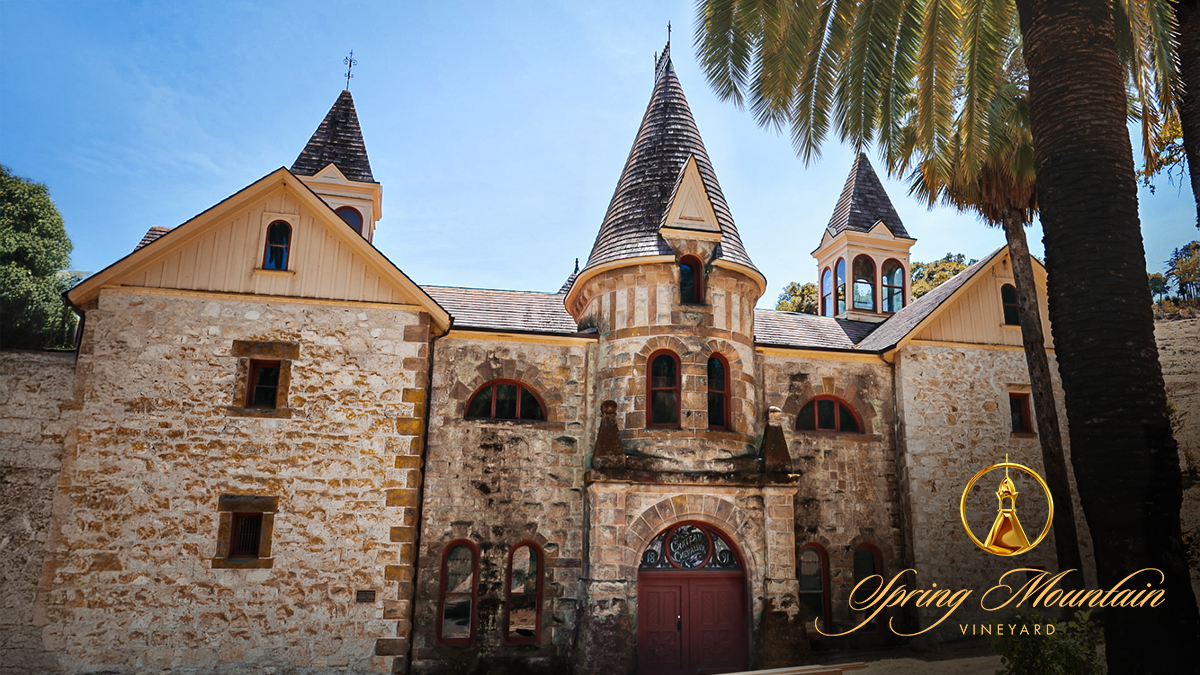

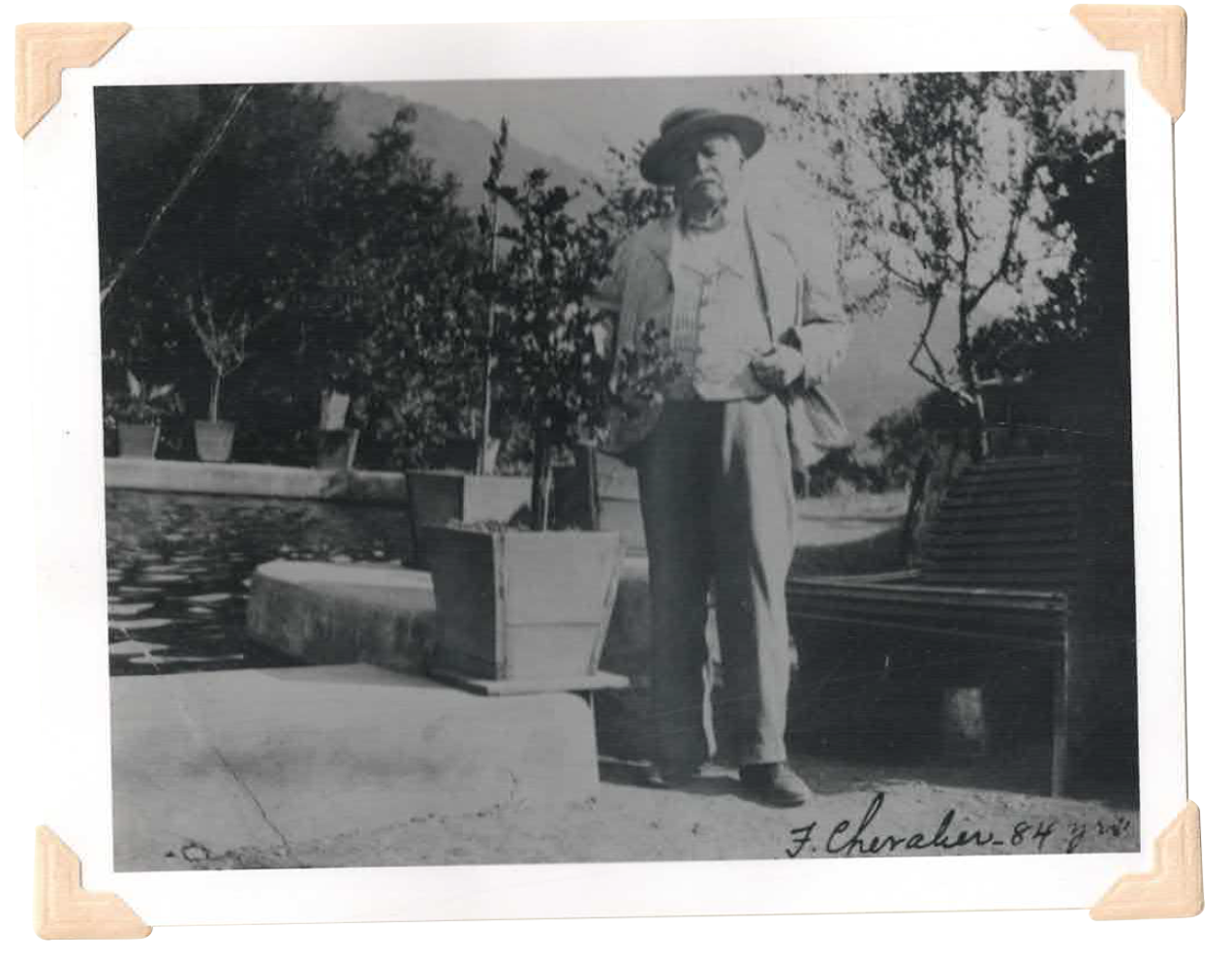
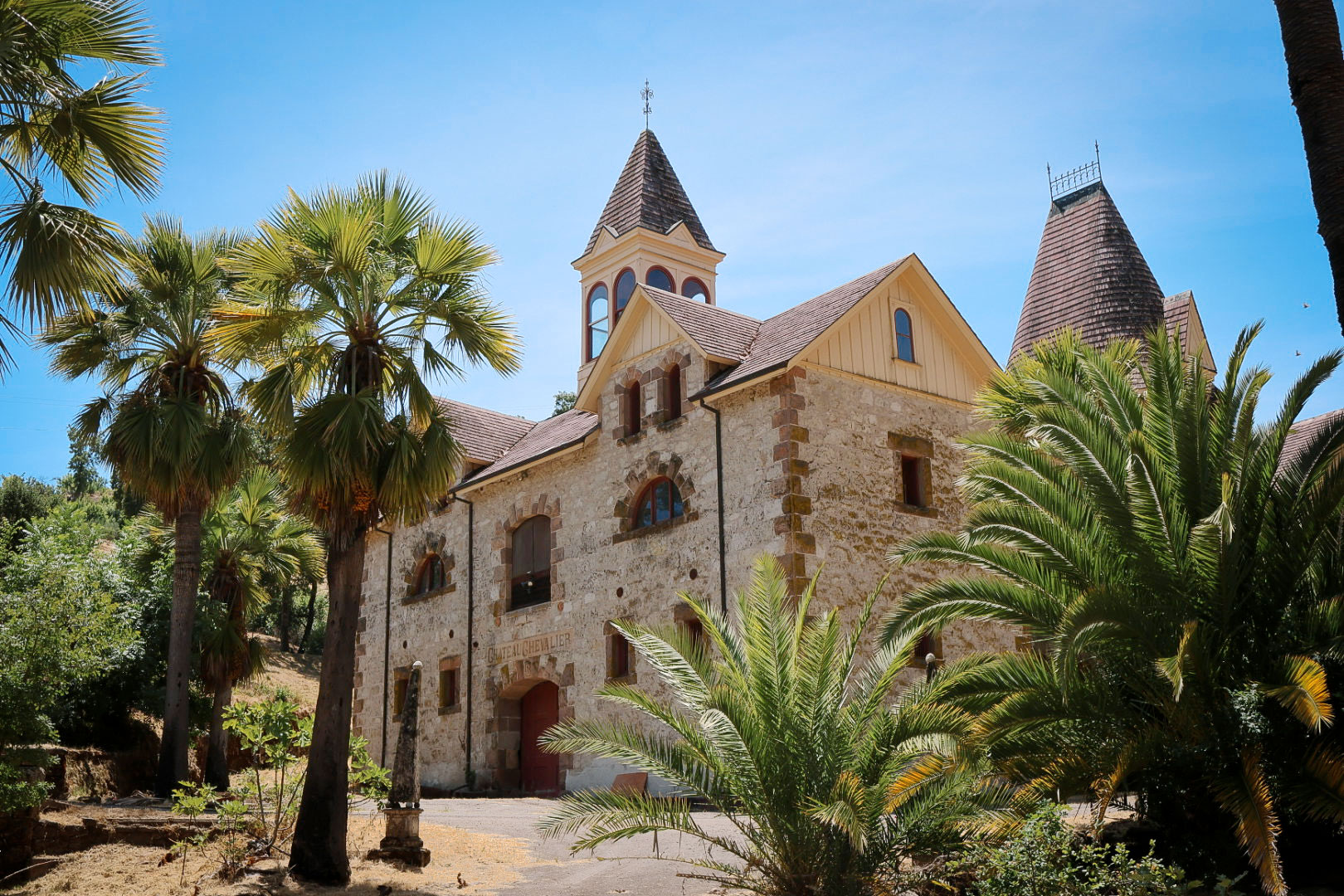
Spring Mountain Vineyard is a combination of four historical ranches, each with its own unique story and location on the mountain. Tucked behind Miravalle and just below La Perla is the Chevalier Ranch – 125 acres of rolling mountain landscape with terraced hillside blocks and a century-old stone winery. The property was founded by Fortune Chevalier, who bestowed not only his surname, but the capricious nature of his first. Its complex history has been shaped by the swings of fate – filled with great prosperity and terrible tragedies. It’s a story of chance and destiny, driven by gold and haunted by ghosts.
For the first time in decades, we’ve released a single-vineyard Cabernet Sauvignon from this historic ranch. Its storied past seems to emanate through the wine itself: richly layered, beautiful, and marked by undeniable intrigue.
The Beginning: Fortune Chevalier
Born in France, Fortune Chevalier arrived in California in 1850 at the height of the Gold Rush. Although he originally came to establish a stained-glass business, he was lured to Placerville by the promise of gold. Finding little success as a prospector, he instead turned his attention to wine and spirits, supplying the thousands of thirsty miners who flocked to the region.
By 1872, Chevalier relocated his thriving business—F. Chevalier & Company—to San Francisco, where he became the sole agent for Old Castle Bourbon Whiskey and an importer of Grappe d’Or Cognac. Around the same time, phylloxera was devastating vineyards across Europe, resulting in a scarcity of French wines and sparking a wine boom in the Napa Valley. Chevalier purchased his Saint Helena property in 1880, at the tail end of this flourishing era. A year later, his winery was complete, and he was 76 years old.

1891 - 1914: Chevalier Family
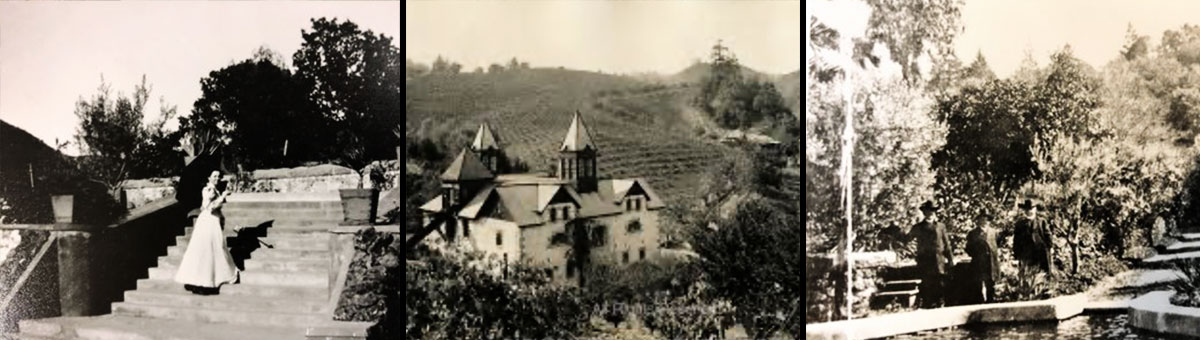
Fortune Chevalier spent most of his time in San Francisco, while his youngest son, George, oversaw much of the winery operations. The two-story winery was completed in 1891, featuring a revolutionary gravity-flow design. George planted 40 acres of land to vineyards and lined the road with both palm and olive trees. He created extensive gardens with complex paths, terraces, pools for swimming, and several stone stairways – sometimes leading nowhere in particular – which contributed to the exotic ambiance. The Chateau Chevalier wines, according to one account, were “well known and appreciated locally as well as in the eastern states.” Fortune Chevalier died in April, 1899, at the age of 84.
In 1906, George and his family made the permanent move to the property after their home in San Francisco was destroyed by the great earthquake. Further tragedy struck in 1914 when George bought his son a 22-calibre Winchester. The 11-year-old died after the gun accidentally discharged into his stomach. George sold the property after the incident.
1918 - 1940: The Hart Family
After changing hands several times, the estate was purchased in 1918 by Berkeley oilman H.H. Hart and renamed Harthaven. Hart had made—and lost—a fortune in Alaska when his boat carrying an estimated $1–2 million struck an iceberg and sank in 1901. He soon rebuilt his wealth through oil investments.
Hart had little interest in winemaking, but the vineyards were maintained, and grapes were sold to local wineries. He died in 1927 following a mysterious three-month illness. His second wife, Louise, remained on the property until her death in 1933. Shortly thereafter, the main residence burned down, and the Hart children sold the property in 1940.
For the next several decades, it remained a quiet country retreat, awaiting the second Napa Valley wine boom of the late 1960s.
Bissonette family
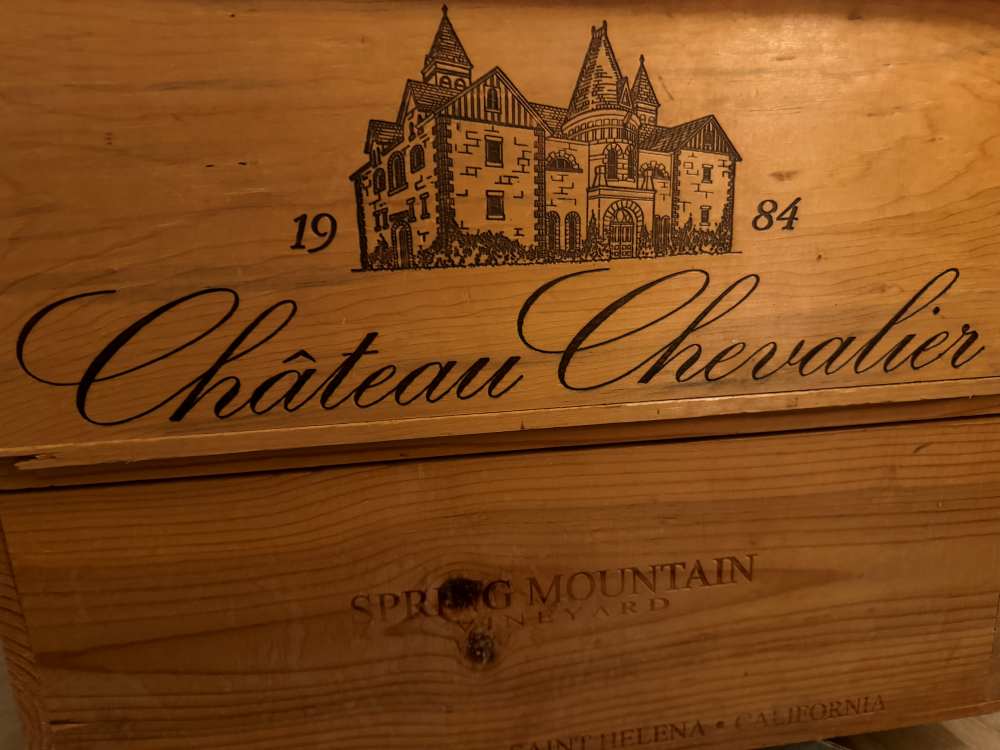
In 1970, the Bissonette family purchased the land, replanted the vineyard, and in 1973 made the first wine in the Chateau since Prohibition. A few years later, Chateau Chevalier wines were again being sold throughout the country. The first floor of the winery was used for winemaking while the second floor was converted to a residence. In this new incarnation, Chateau Chevalier prospered. Its wines were good and several vintages of Cabernet Sauvignon were great.
The Nickel Brothers:
In the early 1980s, Chateau Chevalier was purchased by John and Gil Nickel of Far Niente Winery. They undertook extensive renovations and replanted the vineyards primarily to Cabernet Sauvignon, with smaller amounts of Merlot and Cabernet Franc. The vineyard terraces were thoughtfully redesigned, but the rootstock used—AXR-1—proved vulnerable to phylloxera.
As vineyards throughout Napa and Sonoma began to decline, the fate of Chevalier became clear. Facing the prospect of replanting yet again, the Nickel brothers reluctantly chose to part with the property.
Spring Mountain Vineyard
In 1993, Chevalier Ranch was acquired by Jacqui Safra and became part of Spring Mountain Vineyard. A devoted collector and connoisseur of first-growth Bordeaux, Safra recognized the potential of the mountainside fruit and set out to produce ageworthy wines from the estate’s now 850 acres.
.jpg)
Between 1994 and 1998, the Chevalier vineyard was replanted primarily to Cabernet Sauvignon, with a small amount of Merlot. Vines were planted at a density of 2,000 vines per acre—roughly four times the density of earlier plantings—encouraging lower yields and greater concentration.
That same year, a major restoration of the historic Chateau began. Exterior wood and trim were replaced, the twin towers were fully rebuilt, and the interior residence was removed. Inside, the pristine redwood cellar was returned to a state closely resembling its appearance a century earlier.
In 2020, the Glass Fire swept through Spring Mountain, destroying the original Chateau and leaving only the stone winery standing. Many of the stone walkways, pools, and bridges survived—along with the undeniable beauty of the land and the enduring quality of its vineyards.
In 2022, Safra filed for bankruptcy and the property transitioned to MGG group. As part of a major restoration of the Spring Mountain Vineyards, the vineyards of Chevalier Ranch will be replanted in the next few years and plans to preserve the history of the estate and return it to its former glory are underway.