


What a 10-degree temperature difference on a September harvest morning reveals about mountain-grown Cabernet Sauvignon.
By Peter Ekman | November 2026
On September 22, during our 2026 harvest, I experienced something remarkable on my early-morning drive to Spring Mountain Vineyard. At 6 a.m., the temperature on the Napa Valley floor was 53°F. Thick fog covered the valley, and visibility was so limited that I had to slow down as I climbed Spring Mountain Road.
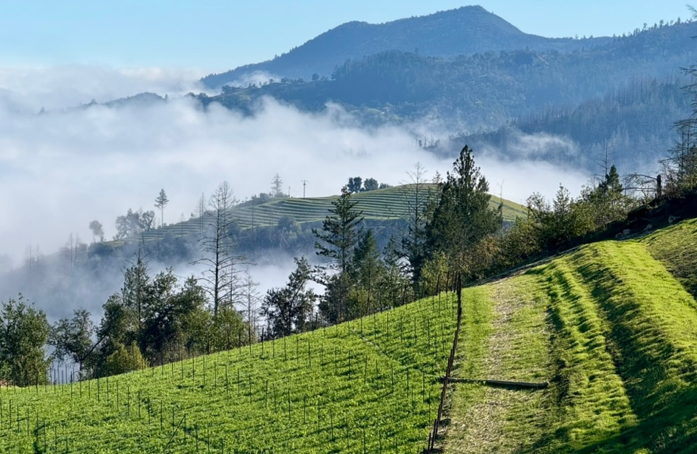
But at approximately 900 feet of elevation, everything changed. The fog disappeared, the rising sun began illuminating the mountains to the east, and the temperature climbed to 63°F—a full 10 degrees warmer than the valley floor below.
At 7:15 a.m., I captured the scene in the photograph above as our vineyard team was working among the vines above the fog. It was a spectacular harvest morning, but it also illustrated something fundamental about Napa Valley's Mountain vineyards.
How can vineyards separated by just a few hundred feet of elevation experience such different growing conditions—and what does that mean for the wines they produce?
Napa Valley's famous morning fog develops as cool marine air moves inland, particularly from San Pablo Bay, and settles across the valley floor. Under certain conditions, this cooler air becomes trapped beneath warmer air, creating what meteorologists call a temperature inversion. That explains what I experienced that September morning: while the valley floor remained cool and fog-covered, our higher vineyards were already receiving direct sunlight and experiencing warmer temperatures.
But the relationship changes throughout the day. Spring Mountain vineyards can experience cooler afternoons and warmer nights than the valley floor, creating a distinctive environment for grape development. Our mountain's varied slopes, exposures and well-drained soils add further complexity, influencing how vines grow, how fruit ripens and how individual vineyard blocks express their character.
Cabernet Sauvignon responds to its growing environment in ways that shape the finished wine. Sunlight, temperature, water availability and soil conditions influence the development of flavors, acidity, color, and tannins. Spring Mountain Vineyard's rocky soils can naturally limit vine vigor and yields, sometimes contributing to smaller berries and a higher proportion of skins relative to juice.
These conditions can produce grapes with concentrated flavors and distinctive tannin structure, qualities often associated with exceptional mountain-grown Cabernet Sauvignon. Yet concentration alone is not the objective. Great Cabernet Sauvignon requires a balance of fruit intensity, freshness, structure, and elegance—and achieving that balance depends on understanding how each vineyard develops throughout the growing season.
This is what makes mountain viticulture so fascinating. Two blocks at different elevations, or even on different sides of the same hillside, can produce fruit with noticeably different characteristics. For discerning winemakers, that diversity creates opportunities to develop wines with greater complexity, individuality, and aging potential.
At Spring Mountain Vineyard, our 845-acre estate encompasses more than 150 vineyard blocks across an extraordinary collection of slopes, exposures, soils, and microclimates. Historically, our mountain-grown fruit has attracted accomplished Napa Valley winemakers, including Lokoya, which sourced grapes from SMV before our replanting began. That heritage reinforces our commitment to understanding and developing the potential of each vineyard site.
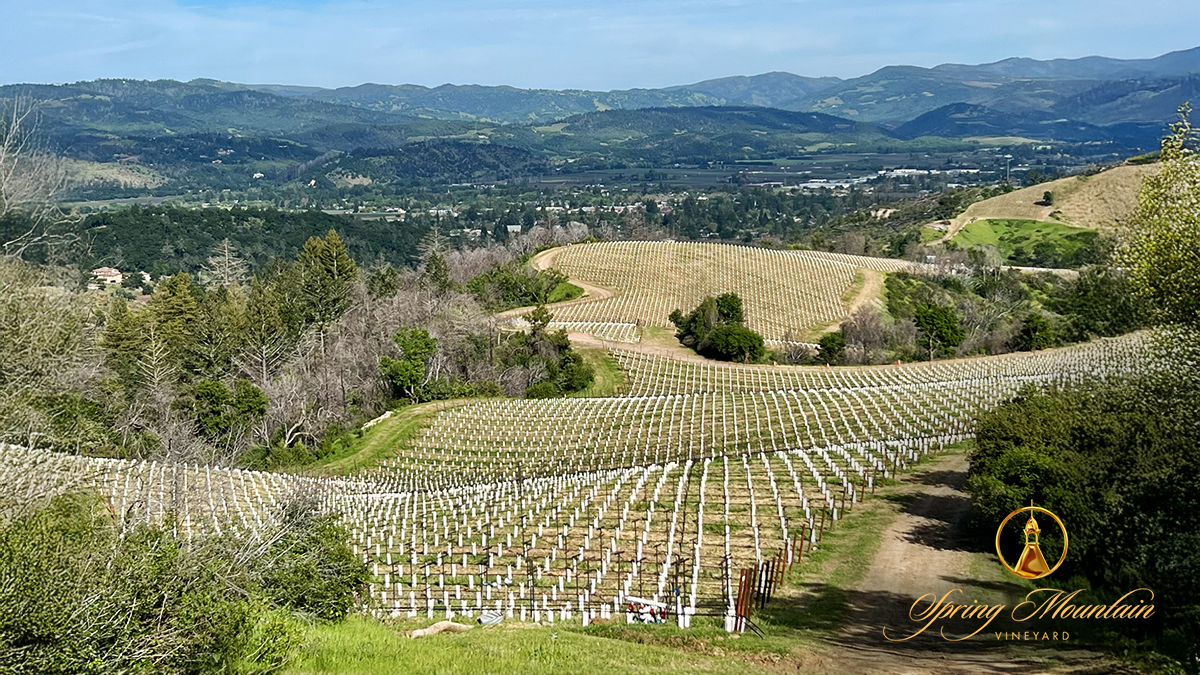
As we replant 225 acres, we are carefully matching varieties, clones, rootstocks, row orientation and farming practices to the characteristics of individual blocks. This requires exceptional viticultural craftsmanship, combining a deep understanding of our mountain with the precision needed to bring out the best in each site. Our objective is to develop vineyards capable of producing exceptional fruit for generations—not simply powerful mountain Cabernet Sauvignon, but grapes with the concentration, structure, freshness, and balance that exceptional winemakers seek.
Of course, growing above the fog does not automatically produce better wine. Some of Napa Valley's most celebrated Cabernets come from valley-floor vineyards, where different growing conditions produce equally remarkable results. Elevation alone never guarantees quality; what matters is understanding and cultivating the distinctive potential of each site.
That September morning, as I stood among our vines looking out across a valley hidden beneath the fog, the contrast was extraordinary. Just a short distance below us, the valley remained sleeping, covered in cool marine air. On the mountain, our vineyard team was already working in the sunshine.
It was a reminder that great wine begins long before the grapes reach the winery—with understanding the land, the climate and how to bring out the best in both.
