


Could one of Napa Valley’s smallest harvests in recent years turn out to be one of its most welcome?
An unusually small crop may help reduce excess wine inventories, while promising fruit quality offers another reason for optimism.
After several challenging years of declining wine consumption, elevated inventories and vineyard removals, the wine industry may have received an unexpected helping hand from Mother Nature.
Preliminary estimates suggest Napa Valley’s 2026 winegrape harvest was approximately 38% smaller than in 2025. For an industry working to reduce excess wine inventories, a significantly smaller harvest could help accelerate the return toward supply-demand balance.
But there is a second, equally encouraging development: despite the small crop, early indications suggest that the 2026 vintage could produce excellent wines.
How did these two seemingly contradictory outcomes come together?
Napa Valley experienced its warmest March in 20 years, accumulating approximately 400 growing degree days and bringing budbreak forward to early March.
Then came an unusually wet and cool spring.
Rain, wind and low temperatures during flowering—particularly around May 4–6—caused widespread shatter, when grape flowers fail to develop into berries.
The result was dramatically smaller clusters and reduced yields. Many Napa vineyards reported production declines of 30–50%, with some experiencing even greater losses.
Much of the crop reduction was therefore determined months before harvest.
Despite the extraordinarily warm March, the overall growing season was surprisingly moderate.
Oakville accumulated 2,973 growing degree days between March 15 and September 30, almost exactly matching its 21-year median of 2,925.
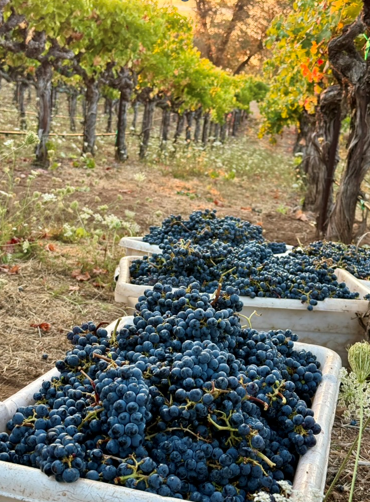
The smaller crop also allowed the vines to concentrate their resources on fewer grape clusters. Combined with favorable September weather, cool nights and an early, dry harvest, the result was fruit showing promising concentration, color and acidity.
Harvest began three to four weeks earlier than normal, with Napa Cabernet Sauvignon picking underway in early September.
The closest comparison may be 2015, another small-crop vintage. But 2026 was considerably cooler overall, potentially offering a different balance of freshness, structure and concentration.
While the wines are still developing, the early quality indicators are encouraging.
The implications extend beyond the quality of the wines.
California’s wine industry has been adjusting to lower consumption through vineyard removals, reduced grape purchasing and the gradual depletion of excess inventories.
A substantially smaller 2026 harvest could accelerate that correction by reducing the volume of new wine entering the market.
Importantly, a smaller harvest does not automatically create a shortage. Existing wine inventories remain elevated, and consumer demand continues to determine how quickly the industry returns to balance.
Nevertheless, the combination of declining vineyard acreage and a light harvest could bring the market closer to equilibrium sooner than many anticipated.
The 2026 Napa Valley vintage may ultimately be remembered for two reasons.
It could help the wine industry work through its remaining inventory imbalance. And it may produce some exceptional wines along the way.
A smaller crop is rarely welcome news for individual growers facing lower yields. But for the broader industry—and potentially for wine lovers—the 2026 harvest may prove to be an important turning point.
For an industry that has spent years struggling with to much wine, 2026 may be remembered as the year when less finally became more.
assessments remain subject to the development of the finished wines.
