Judgment of Paris: The Tasting that Changed Wine Forever
13.05.2026
What Was the Significance of the 1976 Blind Tasting?
The famous Judgment of Paris wine tasting of 1976 was conceived as both a publicity event and an educational experiment. It was organized by Steven Spurrier, a British wine merchant and founder of Académie du Vin in Paris. Spurrier was deeply immersed in French wine culture but curious about emerging regions, like California. Primarily, his goal was to evaluate how well California wines matched up to French wines, and to best illustrate this, he invited seven wineries from California to submit red Bordeaux and white Burgundy wines. Patricia Gallagher, Spurrier’s American business partner, had strong connections to California and helped source the wines for the tasting.
The intent was not to embarrass France, but to celebrate the American Bicentennial (1776–1976) andto explore whether California wines could compete internationally. It also helped generate attention for Spurrier’s Paris wine school and introduced French consumers to New World wines. At the time, California wines were largely unknown and underappreciated in Europe. The significance of the 1976 Judgment of Paris blind tasting was that it recognized a new world-class wine region. It also gave California winemakers and investors the confidence to continue to invest.
How Was the 1976 Judgment of Paris Wine Tasting Conducted?
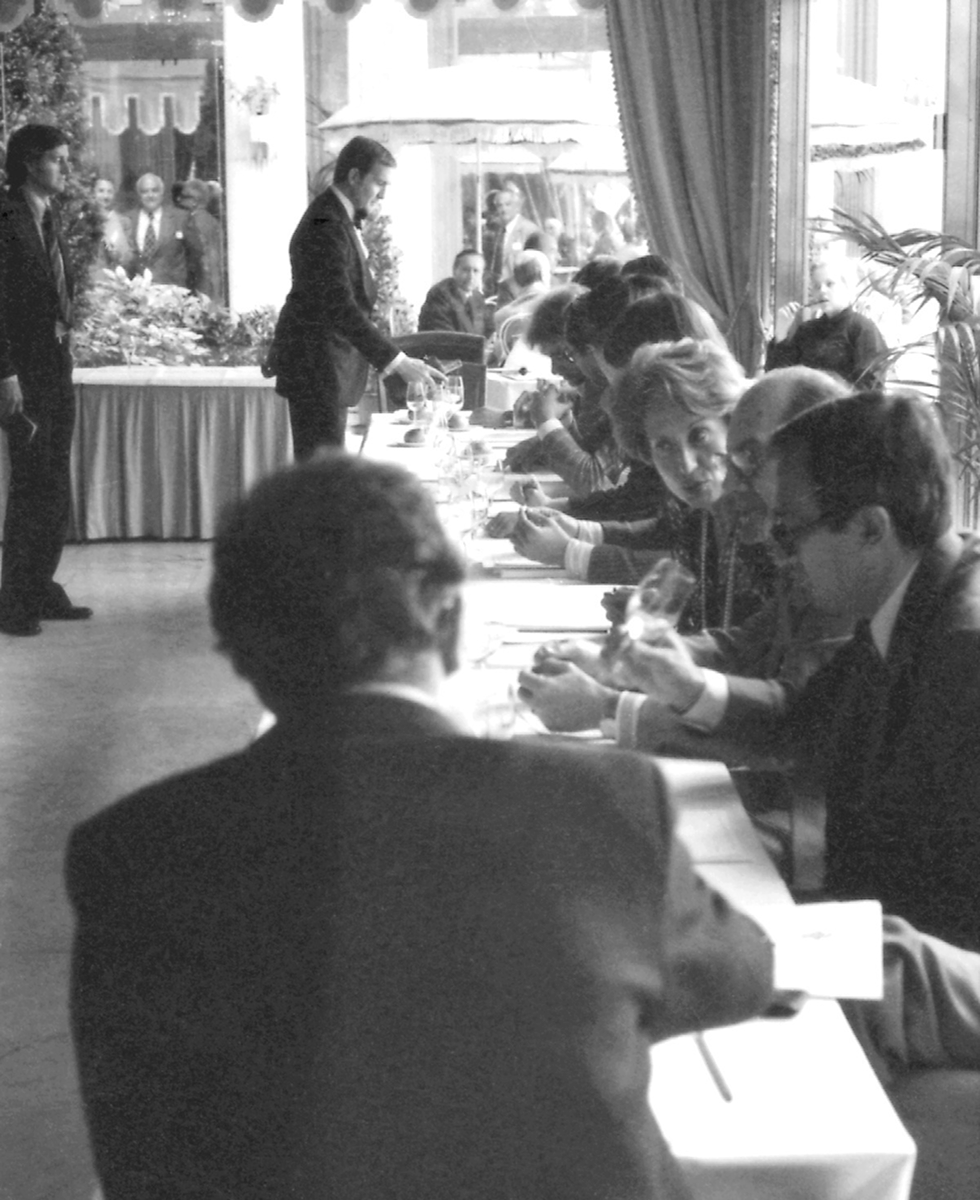
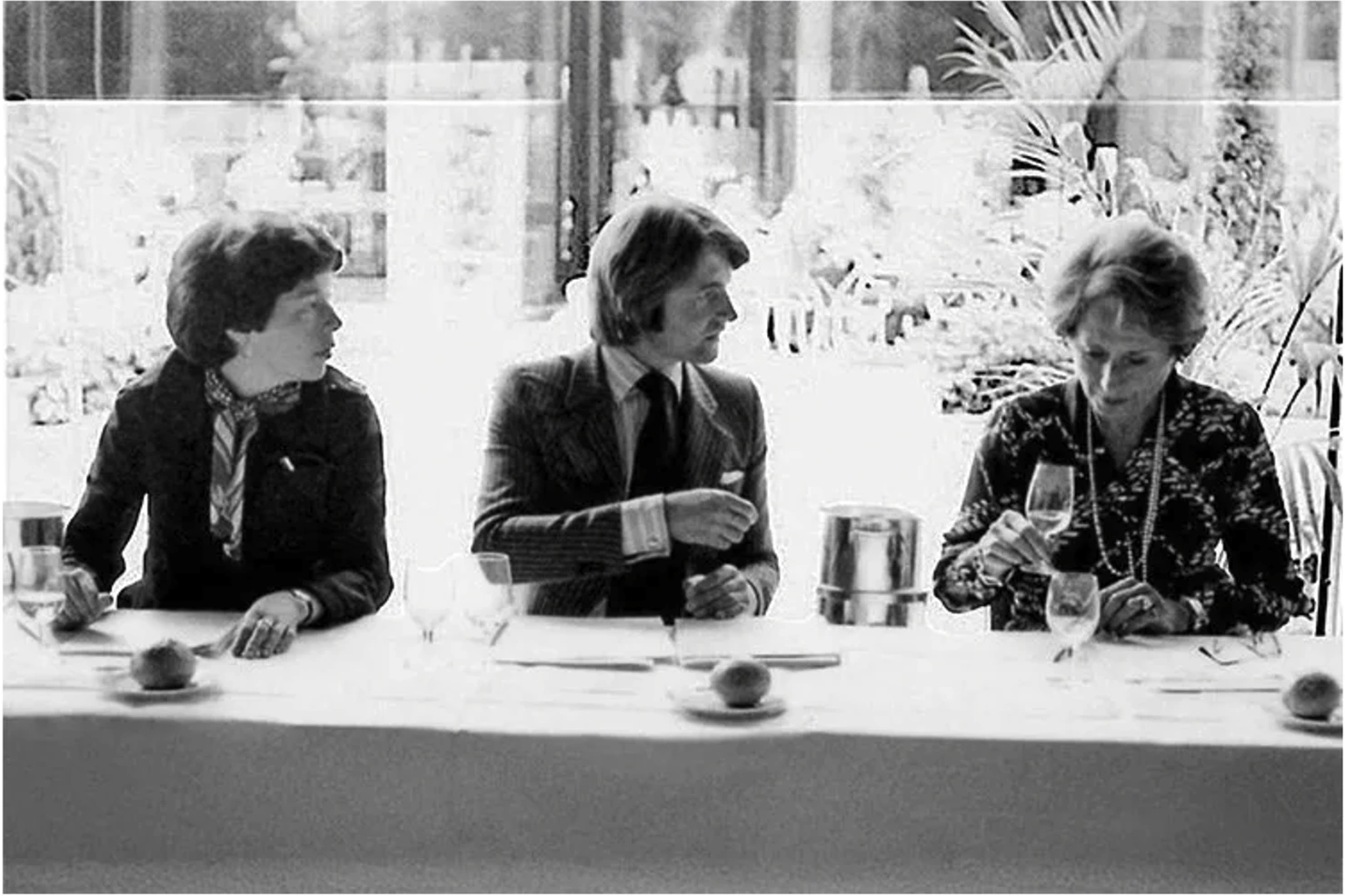
It was a blind tasting, meaning the nine judges did not see the wine labels. The tasting had two categories: Chardonnay and Cabernet Sauvignon. The judges, who were leading wine experts from France, scored the wines on a 20-point scale. The presumption, however, was very clear: that the French wines would dominate.
What White Wines Were Featured in the Judgment of Paris Tasting of 1976?
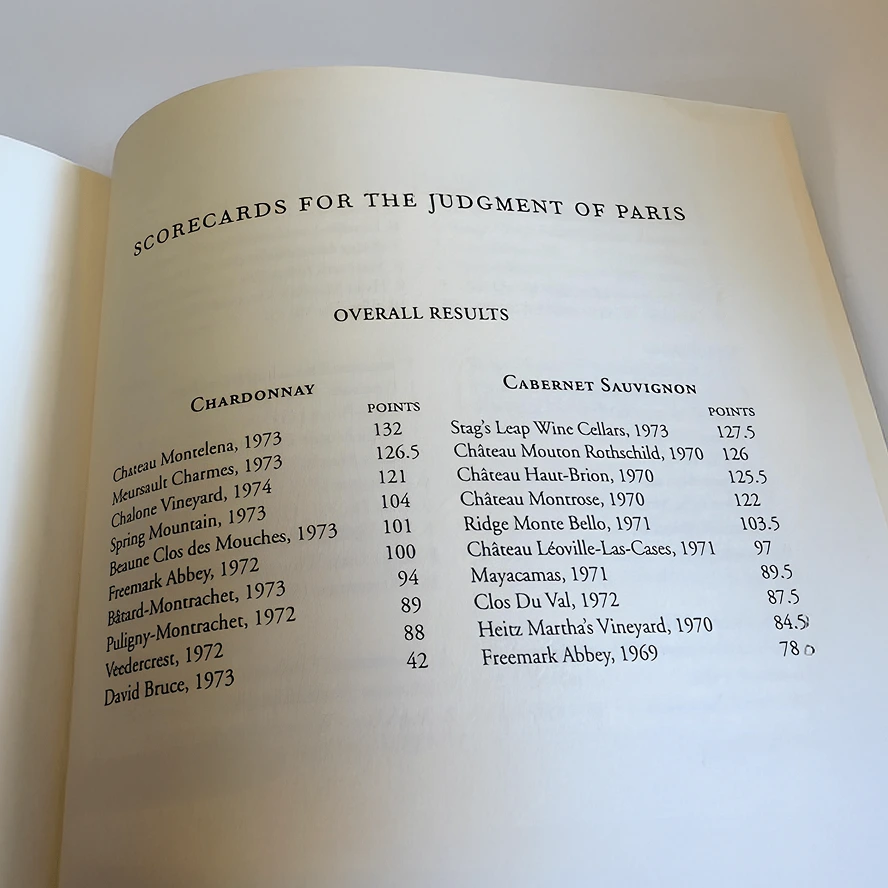
The wines selected for the tasting represented the most well-regarded regions in France – four white Burgundies against six California Chardonnays (and four Grands Crus Chateaux reds from Bordeaux against six California Cabernet Sauvignons). Below is a list of the California Chardonnay producers and their results in the tasting:
Ranking
Winery
Vintage
Appellation
Rating
1st
Chateau Montelena
1973 Chardonnay
Napa, USA
14.14
2nd
Domaine Roulot
1973 Meursault Charmes
Burgundy, FRA
14.09
3rd
Chalone Vineyard
1974 Chardonnay
Chalone, USA
12.14
4th
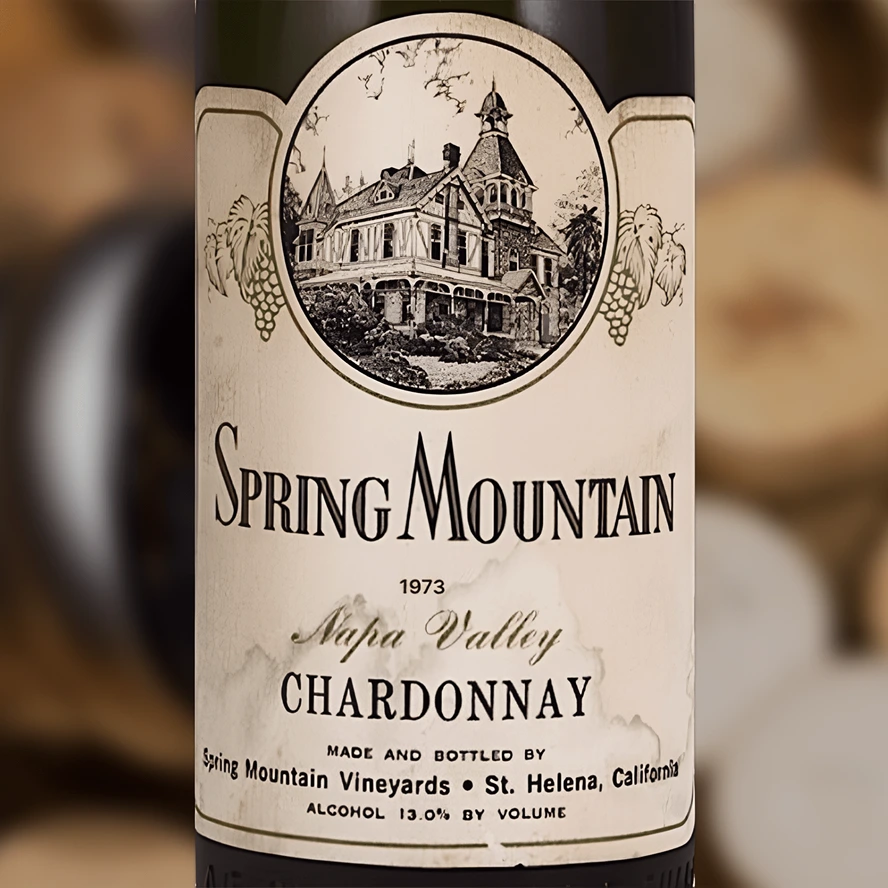
Spring Mtn Vineyard
1973 Chardonnay
Napa, USA
10.41
5th
Joseph Drouhin
1973 Beaune Clos des Mouches
Burgundy, FRA
10.14
6th
Freemark Abbey
1972 Chardonnay
Napa, USA
9.64
7th
Ramonet-Prudhon
1973 Batard-Montrachet
Burgundy, FRA
9.45
8th
Domaine Leflaive
1972 Puligny-Montrachet
Burgundy, FRA
9.18
9th
Veedercrest Vineyards
1972 Chardonnay
Napa, USA
8.82
10th
David Bruce Winery
1973 Chardonnay
Santa Cruz, USA
4.77
Who Were the Judges, and Why Were They Chosen for the Tasting?
The judges were some of France’s most respected wine authorities, selected to ensure credibility. The panel included wine critics, sommeliers, restaurateurs, and producers. Steven Spurrier required this to ensure the tasting would be taken seriously, especially in France. Ironically, their authority made the results even more impactful.
Contrary to the myth, the judges’ careers did not collapse, but the tasting did create tension. Some judges were shocked and skeptical. Odette Kahn famously requested her scorecard back. There was also initial resistance to publishing the results.
Most judges continued their careers successfully and unchanged, and there was no widespread “career damage.” However, the tasting exposed bias in traditional wine evaluation and the limitations of reputation-based judgement. Over time, many judges acknowledged the legitimacy of the results.
Judge
Role, Organization
Odette Kahn
Editor, La Revue du Vin de France
Jean-Claude Vrinat
Owner, Taillevent Restaurant
Raymond Oliver
Owner, Le Grand Vefour Restaurant
Michel Dovaz
Wine Expert, Institut National des Appellations d’Origine
Christian Vanneque
Head Sommelier, La Tour d’Argent
Pierre Tari
Owner, Chateau Giscours (Brdx)
Claude Dubois-Millot
Director, Le Nouveau Guide
Aubert de Villaine
Co-Director, Domaine de la Romanee-Conti
Pierre Brejoux
Inspector, Inspector General, Appellation d’Origine
Who Were the Winemakers Behind the Chardonnay Wines?
The Chardonnay winemakers behind the 1976 Judgment of Paris were pioneering California producers—most notably Chateau Montelena—who defied the French establishment by producing world-class, non-Burgundian Chardonnay. Their victory proved that Napa Valley could produce wines that outperformed top-tier French labels in blind tastings, fundamentally shifting global wine reputation and elevating California.
Winery
Winemaker
Chateau Montelena
Miljenko “Mike” Grgich
Domaine Roulot
Guy Roulot
Chalone Vineyard
Richard Graff
Spring Mtn Vineyard
Mike Robbins/Charles Ortman
Joseph Drouhin
Robert Drouhin
Freemark Abbey
Brad Webb
Ramonet-Prudhon
Pierre Ramonet
Domaine Leflaive
Vincent Leflaive
Veedercrest Vineyards
Alfred Baxter
David Bruce Winery
David Bruce
Why Did California White Wines Perform So Well?
California’s success was driven by precision and freshness at a time when some European wines were inconsistent. Some of the key factors were:
Modern winemaking techniques
Temperature-controlled fermentation
Better sanitation and stability
Reduced oxidation
Riper, cleaner fruit
Reliable sunshine ensured fully-ripened grapes
Less vintage variation than Burgundy
Balance of fruit and acidity
Wines showed immediate appeal and clarity
Judges responded to wines that were expressive and balanced
Blind tasting advantage
Without labels, judges evaluated what was in the glass—not by reputation
Why Did Spring Mountain Vineyard Chardonnay Perform So Well?
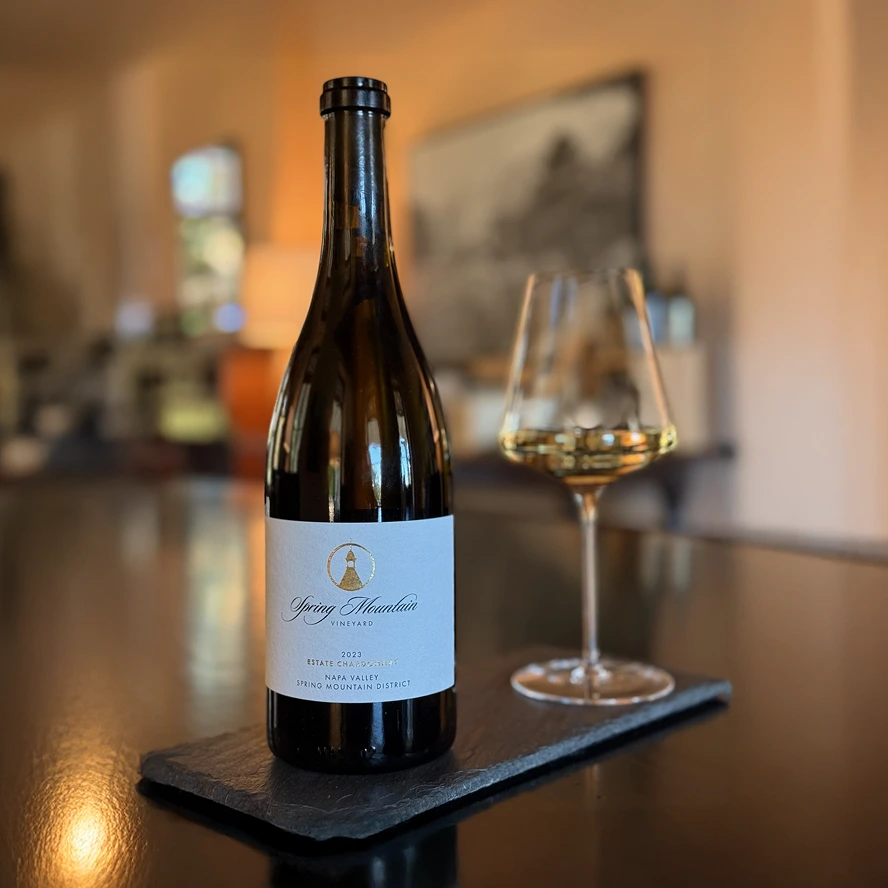
Spring Mountain Vineyard’s 1973 Chardonnay placed 4th overall, outperforming many of Burgundy’s elite producers. Key reasons for Spring Mountain Vineyards’ success in the tasting begins with its Chardonnay’s mountain terroir. Higher elevation, volcanic soils, and longer ripening produces well-balanced wines with bright fruit, a complex palate, and balanced acids. It was selected by Mike Robbins to participate because of its focus on elegance over power and well-integrated flavors rather than intensity. It had a Burgundian style that was very aligned with what the French judges valued.
What Happened After the Judgment of Paris?
The impact was immediate and permanent. For Napa Valley wine history, this meant recognition as a world-class wine region with an associated demand for Napa wines. It also increased confidence among Napa Valley producers and investors.
For France, it became a moment of introspection rather than a period of decline. France continued its dominance, but no longer unchallenged.
For the global wine industry, it meant the rise of New World (California, Australia, Chile) wines and an overall shift toward quality over tradition. Another interesting effect was the expansion of international wine criticism and competition.
Why Is the Judgment of Paris 50th Anniversary Relevant?
The 1976 Judgment of Paris remains highly relevant in 2026, its 50th-anniversary year, because it forever shattered the perception of European wine superiority. It established California as a premier global wine region and solidified the blind-tasting format as a way to ensure quality over reputation. In 2026, it is celebrated as a crucial turning point for industry innovation, proving that terroir outside of Europe could create wines of exceptional quality, complexity, and longevity. Today, that legacy continues. Spring Mountain Vineyard offers a tailored Judgment of Paris wine tasting to honor the Anniversary. You can make your reservation here: Judgment of Paris experience. It is a 90-minute, private experience with a dedicated sommelier at $95.00 per person.
Frequently Asked Questions About the Judgment of Paris
Can I Buy Bottles of the Wines That Were Part of the Judgment of Paris Tasting?
Yes. Spring Mountain Vineyards continues to make its Chardonnay that rivals the finest French Burgundies. The 2024 Spring Mountain Vineyard Chardonnay recently placed in the top three white wines during a JoP re-enactment tasting in Nashville in April 2026. Unfortunately, we no longer have the original vintage that was submitted for the 1976 wine tasting.
How Do Modern Winemakers Compare Their Products to Those in the Judgment of Paris?
Modern winemakers view the 1976 Judgment of Paris as a foundational moment that validated New World quality, often arguing that today's wines are even better, more refined, and better-aged than those that originally won. While California Cabernet and Chardonnay were very similar to French styles fifty years ago, today they showcase a complex regional diversity with a focus on the unique microclimates and terroir, as well as modern winemaking techniques. For example, Napa has far more diverse soil profiles compared to the more focused terroir of Bordeaux, allowing for a greater variety of wine styles.
How Did French Judges React to the Results of the Judgment of Paris?
When the results of the 1976 Judgment of Paris were announced, the French judges reacted with shock, outrage, and denial. The blind tasting — organized in Paris by British wine merchant Steven Spurrier — had pitted top California wines against elite French vintages, and the Americans won. For the judges, many of them pillars of the French wine establishment, the humiliation was immediate and public.
Did the French judges try to hide their scores?
Yes. Several judges attempted to reclaim their scorecards on the spot to prevent their individual results from becoming known. The most notable case was Odette Kahn, a highly influential French wine critic and editor, who famously tried to take back her scorecard after it became clear she had awarded high marks to the California wines. Her attempt was unsuccessful, and the results stood.
Were there professional consequences for the judges?
For some, yes. The reputational damage was significant enough that certain judges faced pressure to step down from prestigious roles in the French wine industry. The broader establishment also went on the offensive, arguing that the tasting format was flawed — claiming the younger California wines were optimized for immediate fruit flavor rather than the complexity that develops with long aging. A rematch 30 years later would tell a different story.
What happened to Steven Spurrier after the Judgment of Paris?
Spurrier faced serious personal and professional backlash from the French wine community. Widely accused of engineering an ambush that damaged France's global reputation for wine supremacy, he was ostracized and temporarily banned from some French wine-tasting tours. Ironically, the event he organized became one of the most celebrated moments in modern wine history — and cemented his own legacy in the process.
How Did the 1976 Judgment of Paris Affect the Reputation of New World Wines?
The 1976 Judgment of Paris showed that terroirs outside of France could produce exceptional wines. New World wine producers (California, Australia, South America, etc) have all benefited from the blind tasting that shattered the notion that only Europe could produce high quality wines. It gave a rise to these and other countries exploring and growing their wine production, and rivaling Old World production. It also introduced new technologies that modernized the wine world.
What Is the Significance of the 1976 Judgment of Paris Wine Tasting for Napa Valley Today?
In the fifty years since the 1976 Judgment of Paris wine tasting, Napa Valley has flourished as a premier global wine producer and destination. It solidified the prestige of Napa Valley - both for quality and reputation. Today, California is highly respected as a leading producer of some of the finest wines in the world. Napa moved from having roughly 60–70 wineries in the early 1970s to over 500 today, transforming into a global luxury brand.
Stories from the mountain
Join our mailing list for the latest news, special offers, and upcoming events.
By sharing your details, you agree to receive marketing from Spring Mountain Vineyard. Your info is protected by our privacy policy, and you can unsubscribe anytime.